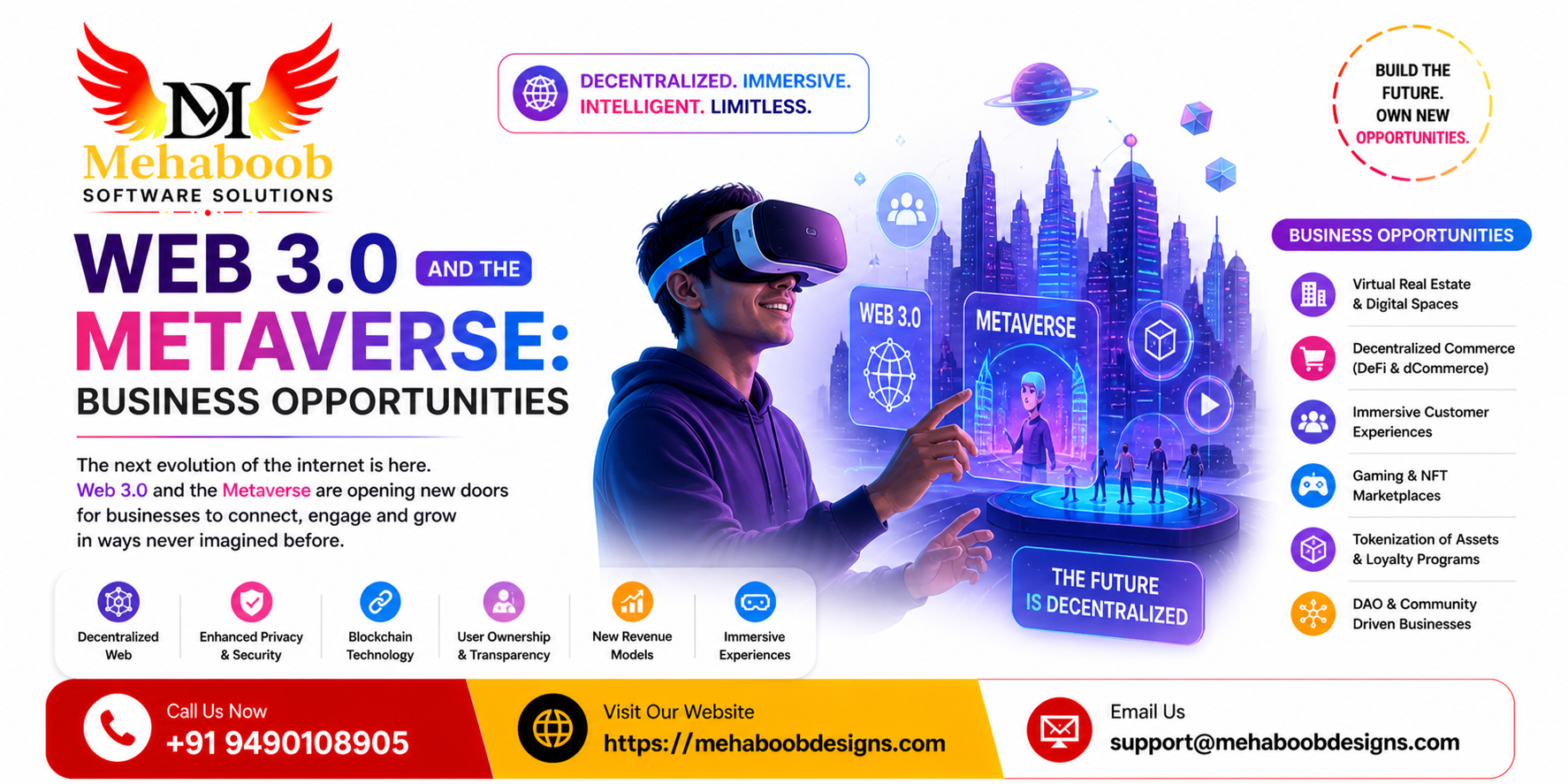
Web 3.0 represents the next evolution of the internet, characterized by decentralization, blockchain technology, and user ownership. Combined with the metaverse's virtual worlds, these technologies are creating unprecedented business opportunities. In 2026, early adopters are gaining significant competitive advantages.
1. Understanding Web 3.0
Web 3.0 is built on blockchain technology, enabling decentralized applications (dApps), smart contracts, and user-controlled data. Unlike Web 2.0 where big tech companies control user data, Web 3.0 gives users ownership and control over their digital assets and identity.
Key Web 3.0 Features:
- Decentralization: No single entity controls the network
- User Ownership: Users control their data and digital assets
- Blockchain Integration: Secure, transparent transactions
- Interoperability: Seamless integration between platforms
2. The Metaverse Business Landscape
The metaverse offers immersive virtual environments where users can work, socialize, shop, and entertain. Businesses are creating virtual storefronts, hosting events, and offering unique digital experiences that complement their physical offerings.
Metaverse Business Applications:
- Virtual Retail: Digital storefronts and showrooms
- Virtual Events: Conferences, concerts, and product launches
- Digital Real Estate: Virtual properties and spaces
- Virtual Services: Consulting, education, and entertainment
3. NFTs: Beyond Digital Art
Non-Fungible Tokens (NFTs) represent unique digital assets on the blockchain. While famous for digital art, NFTs are revolutionizing business through digital collectibles, virtual real estate, gaming assets, and even intellectual property rights.
Business NFT Applications:
- Digital collectibles and merchandise
- Virtual event tickets and passes
- Brand loyalty programs and rewards
- Intellectual property and licensing
4. Decentralized Finance (DeFi) Integration
DeFi platforms are creating new financial services without traditional intermediaries. Businesses can access decentralized lending, insurance, and payment processing, reducing costs and increasing efficiency.
5. Virtual Reality (VR) and Augmented Reality (AR)
VR and AR technologies are essential components of the metaverse experience. Businesses are using these technologies for virtual showrooms, remote collaboration, training simulations, and enhanced customer experiences.
6. Getting Started with Web 3.0
Begin by exploring blockchain platforms, understanding cryptocurrency basics, and identifying how your business can benefit from decentralization. Consider pilot projects in customer loyalty, digital collectibles, or virtual experiences.
Future Outlook
As Web 3.0 and metaverse technologies mature, we'll see more seamless integration between physical and digital worlds. Businesses that embrace these technologies early will shape the future of their industries.
🌐 Ready to Enter Web 3.0?
Our experts can help you navigate Web 3.0 technologies and create innovative solutions for your business.
Get Web 3.0 Consultation