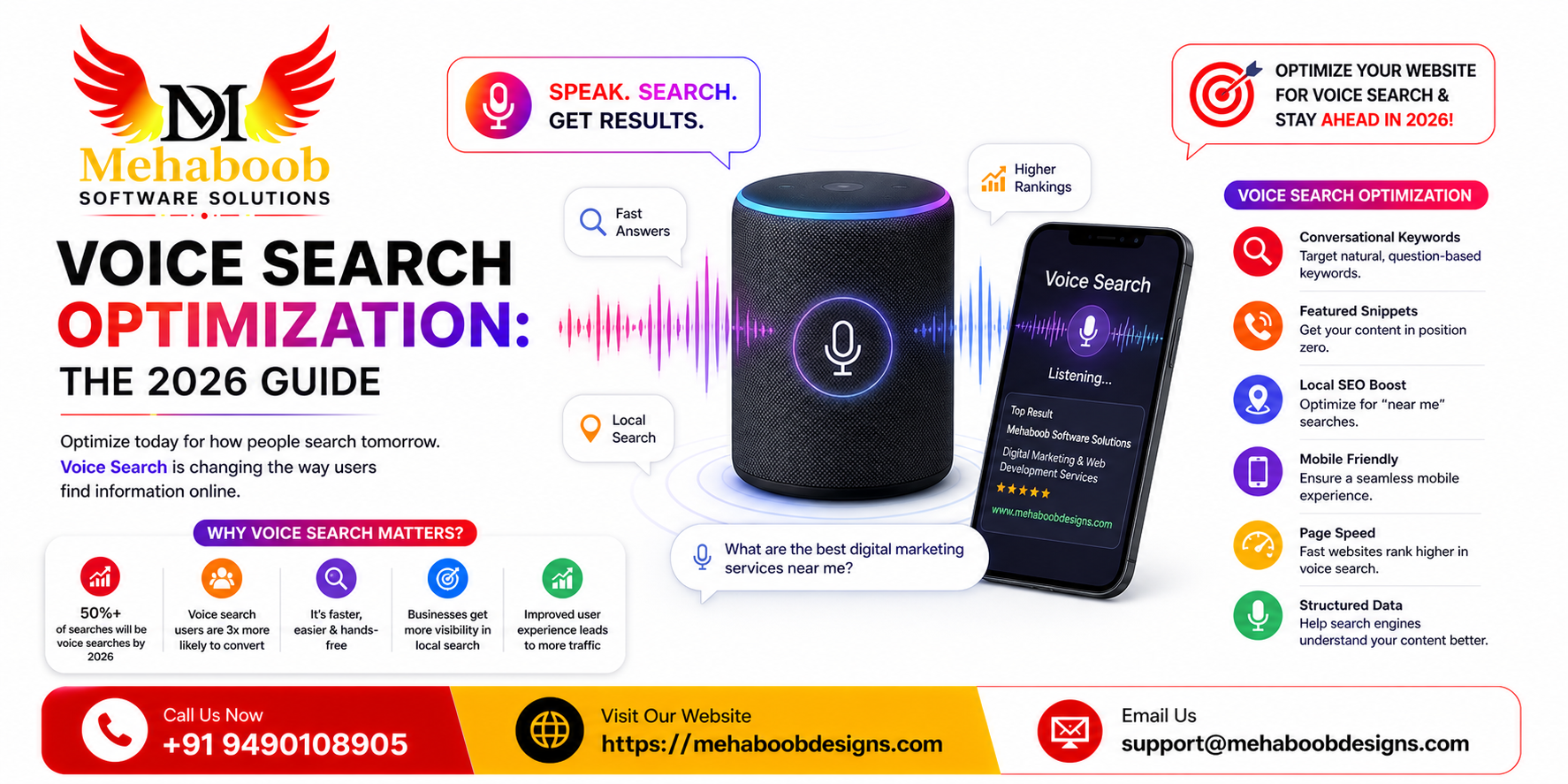
Voice search has transformed how users interact with technology. By 2026, over 50% of all searches are voice-based, and businesses that optimize for voice search are capturing significant market share. This comprehensive guide will help you optimize your website for Alexa, Siri, Google Assistant, and other voice platforms.
1. Understanding Voice Search Behavior
Voice searches differ from typed searches in several key ways. Users speak naturally, ask complete questions, and expect immediate, conversational answers. Understanding these behavioral patterns is crucial for optimization success.
Voice Search Characteristics:
- Conversational Tone: Users speak naturally, not in keywords
- Question-Based: Most voice searches are questions
- Local Intent: 58% of voice searches have local intent
- Immediate Results: Users expect quick, direct answers
2. Conversational Keyword Strategy
Traditional SEO focuses on short keywords, but voice search requires conversational, long-tail keywords. Think about how users actually speak when searching for your products or services.
Voice Keyword Examples:
- Traditional: "restaurant Visakhapatnam"
- Voice: "What are the best restaurants near me in Visakhapatnam?"
- Traditional: "web design services"
- Voice: "Who offers the best web design services for small businesses?"
3. Featured Snippets and Position Zero
Voice assistants often read featured snippets (position zero) as answers. Optimizing for featured snippets increases your chances of being the voice search result.
Featured Snippet Optimization:
- Structure content with clear headings
- Use question-based headings (H2, H3)
- Provide concise, direct answers (40-50 words)
- Use bullet points and numbered lists
4. Local SEO for Voice Search
With 58% of voice searches having local intent, local SEO optimization is critical. Ensure your business appears in "near me" searches and local voice queries.
Local Voice Optimization:
- Optimize Google Business Profile completely
- Include local keywords naturally
- Ensure consistent NAP (Name, Address, Phone)
- Encourage customer reviews and ratings
5. Page Speed and Mobile Optimization
Voice search requires fast-loading, mobile-friendly websites. Most voice searches occur on mobile devices, and users expect instant results.
6. Structured Data and Schema Markup
Implement structured data to help search engines understand your content better. Use FAQ schema, HowTo schema, and other relevant markup types.
7. Creating Voice-Friendly Content
Write content that answers questions naturally. Use FAQ pages, create conversational blog posts, and develop content that addresses user intent.
Measuring Voice Search Success
Track voice search performance through Google Search Console, analytics, and voice-specific metrics. Monitor featured snippet performance and local search rankings.
🎤 Ready to Optimize for Voice Search?
Our voice search optimization experts can help you capture the growing voice search market and stay ahead of the competition.
Get Voice Search Optimization