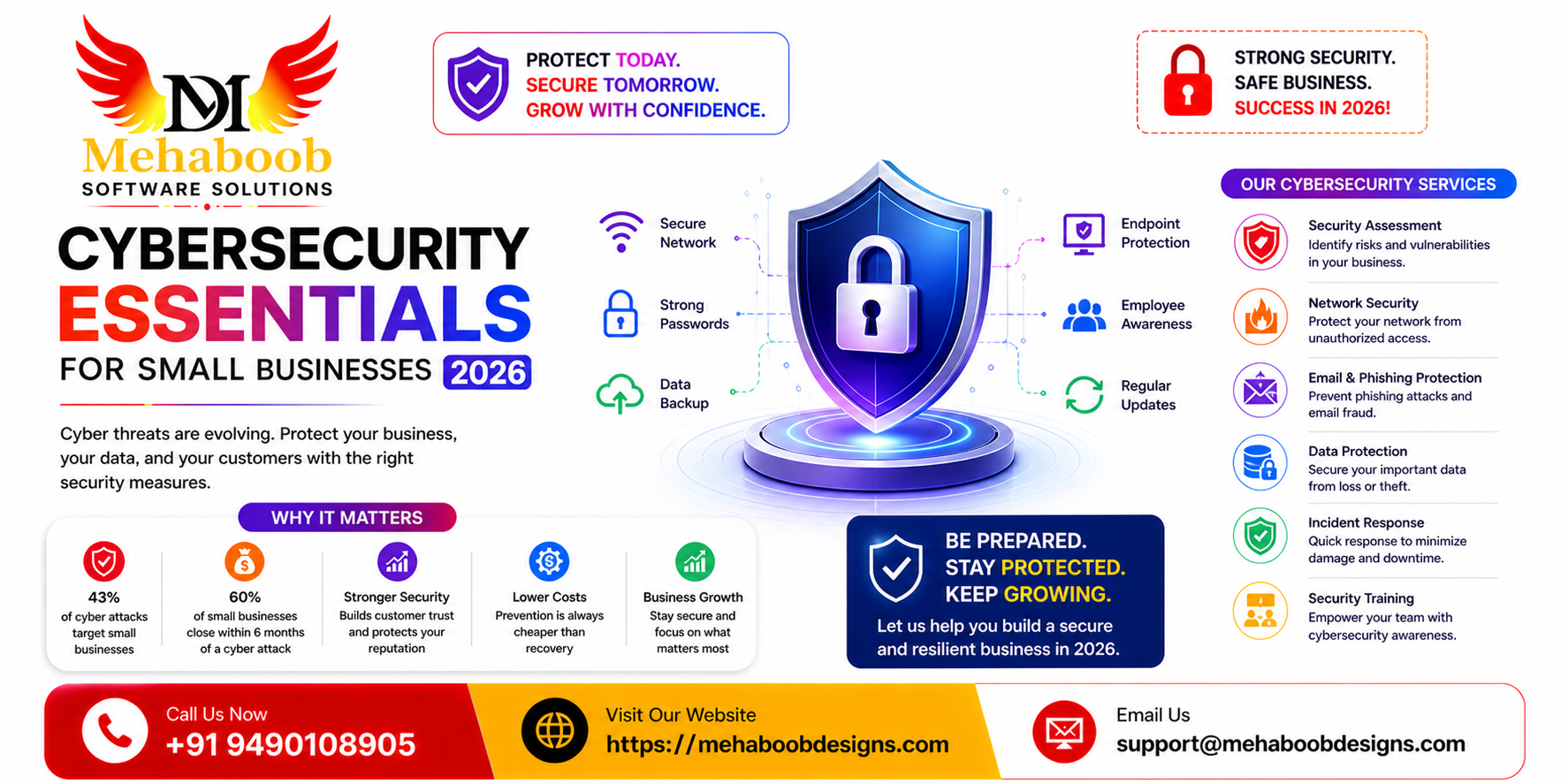
Small businesses are increasingly becoming targets for cybercriminals. In 2026, cyber threats are more sophisticated than ever, and a single breach can cost your business thousands of dollars and irreparable damage to your reputation. This comprehensive guide will help you implement robust cybersecurity measures to protect your business.
1. Understanding Current Cyber Threats
Cyber threats in 2026 have evolved beyond simple viruses and malware. Today's threats include ransomware, phishing attacks, data breaches, and sophisticated social engineering tactics designed to bypass traditional security measures.
Major Cyber Threats for Small Businesses:
- Ransomware: Malware that encrypts your data and demands payment
- Phishing Attacks: Deceptive emails designed to steal credentials
- Data Breaches: Unauthorized access to sensitive business and customer data
- Insider Threats: Security risks from current or former employees
2. Essential Security Protocols
Implementing robust security protocols is your first line of defense against cyber threats. These measures create multiple layers of protection to secure your business data and systems.
Core Security Protocols:
- Multi-Factor Authentication (MFA): Require multiple verification methods
- Strong Password Policies: Complex passwords with regular changes
- Network Segmentation: Separate critical systems from general networks
- Regular Security Audits: Quarterly assessments of security measures
3. Data Encryption and Protection
Encryption converts your data into unreadable code that can only be deciphered with the correct encryption key. This protects sensitive information even if it falls into the wrong hands.
Encryption Best Practices:
- Encrypt all sensitive data at rest and in transit
- Use AES-256 encryption for maximum security
- Implement end-to-end encryption for communications
- Regularly update encryption keys and certificates
4. Employee Training and Awareness
Your employees are your first line of defense. Regular cybersecurity training helps them recognize and respond appropriately to potential threats.
Training Topics:
- Recognizing phishing emails and suspicious links
- Safe password practices and management
- Proper handling of sensitive data
- Incident reporting procedures
5. Compliance Standards and Regulations
Different industries have specific compliance requirements. Understanding and implementing these standards is crucial for avoiding legal penalties and maintaining customer trust.
Key Compliance Standards:
- GDPR: For businesses handling EU citizen data
- PCI DSS: For businesses processing credit card payments
- HIPAA: For healthcare-related businesses
- ISO 27001: International security management standard
6. Backup and Disaster Recovery
Regular backups and a solid disaster recovery plan ensure business continuity in case of a cyber attack or data loss.
Backup Strategy:
- Daily automated backups of all critical data
- 3-2-1 backup rule (3 copies, 2 media types, 1 off-site)
- Regular testing of backup restoration procedures
- Cloud-based backup solutions for redundancy
7. Security Tools and Technologies
Invest in modern security tools that provide comprehensive protection against evolving threats.
Essential Security Tools:
- Next-generation antivirus and anti-malware
- Firewall and intrusion detection systems
- Security Information and Event Management (SIEM)
- Endpoint Detection and Response (EDR) solutions
Creating a Cybersecurity Culture
Cybersecurity is not just an IT issue—it's a business issue. Create a culture where every employee understands their role in protecting the business.
🔒 Need Professional Cybersecurity Help?
Our cybersecurity experts can assess your current security posture and implement comprehensive protection measures tailored to your business needs.
Get Security Assessment